

Fifty Years of Vision: How the Hassan II Golf Trophy Helped Put Morocco on the Global Map
In May 2026, Morocco celebrated a remarkable sporting milestone: the 50th edition of the Hassan II Golf Trophy at Royal Golf Dar Es Salam. What began in 1971 as the personal vision of King Hassan II has evolved into one of the most respected golf events outside the traditional golf circuits of Europe and North America.
Half a century later, the tournament stands not only as a celebration of golf, but as proof of how sport can become a powerful instrument of diplomacy, tourism, economic development, and national branding.
The idea was bold for its time. In the late 1960s and early 1970s, Morocco was still shaping its modern international identity. Few would have imagined that a North African kingdom could host legends of global golf and create a tournament that would endure for five decades. Yet King Hassan II understood something many leaders of his era did not: elite sport attracts elite attention. The king saw golf not simply as recreation for the wealthy, but as a strategic platform to present Morocco to the world.
Building More Than a Tournament
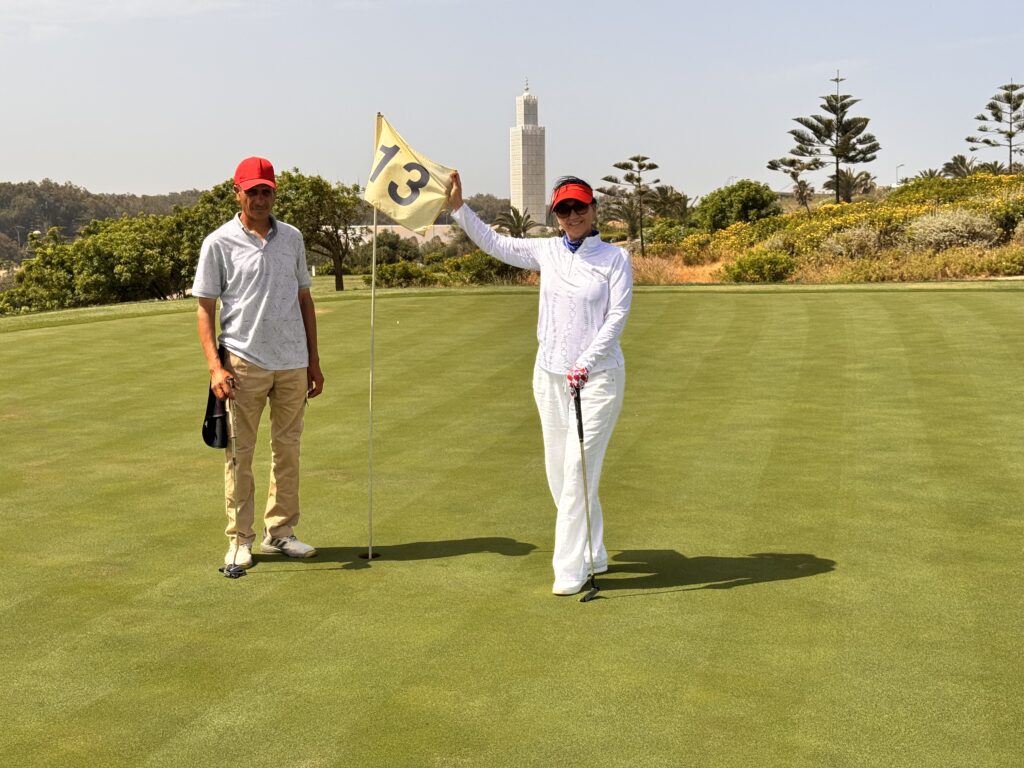
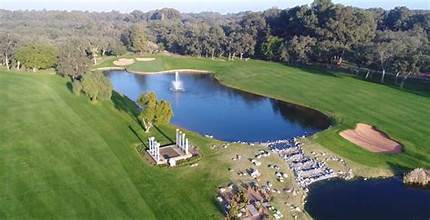
The centerpiece of this vision became Royal Golf Dar Es Salam, the stunning golf complex built in Rabat and designed by renowned architect Robert Trent Jones Sr. Nestled within a cork oak forest, the course immediately earned international respect for both beauty and difficulty. In 2017 through 2019 architect James Duncan was brought in to upgrade the Red course by building new greens on the basis of RTJ’s sketches, renovating all the bunkers, extensive improvements were also made to the irrigation and drainage systems as well as the tees.
But the real genius was what the tournament represented beyond the fairways. At a time when international media exposure was limited, the Hassan II Trophy brought global television cameras, sponsors, athletes, and influential visitors directly into Morocco. Legends such as Billy Casper, Lee Trevino, Vijay Singh, Payne Stewart, Nick Price, Colin Montgomerie, Padraig Harrington, Gary Player, Severiano Ballesteros, Nick Faldo, Ernie Els, and Bernhard Langer all competed in Morocco over the years.
Players returned home speaking not only about golf, but about Moroccan hospitality, cuisine, architecture, weather, and culture. Long before social media, Hassan II understood experiential marketing: if influential people fall in love with your country, they become ambassadors for it.
Golf as a Tourism Engine
Today, golf tourism is one of Morocco’s most valuable high-end tourism sectors, with over 40 courses in destinations such as Rabat, Marrakech, Agadir, Tangier, and Casablanca it is attracting international golfers year-round.
That ecosystem did not emerge by accident. The Hassan II Trophy helped establish Morocco as a premium golfing destination decades before many competing markets invested seriously in sports tourism. The tournament encouraged infrastructure development, hotel investment, airline connectivity, and international partnerships.
Crucially, it also diversified Morocco’s image abroad. Instead of being known solely for imperial cities and desert tourism, Morocco began to position itself as modern, cosmopolitan, and internationally connected.
From Royal Prestige to Global Sporting Credibility
The tournament’s evolution mirrors Morocco’s broader rise on the international sporting stage. Originally an invitational event, the competition later joined the European Tour and now forms part of the PGA Champions Tour schedule played on the Red course.
Moving from an invitational event to a stop on the PGA Champions Tour signaled that Morocco was no longer simply hosting an exhibition under royal patronage; it had become a credible and respected stop on the global golf calendar.
Just as we see with other countries, this reflects part of a broader engagement between the Morocco and sports as a strategic platform for international influence and to showcase the countries development and hospitality— from football and athletics to motorsport and golf.
The Smartest Modern Evolution: Women’s Golf Alongside the Men
Perhaps the most forward-looking decision made 29 years ago was staging the Lalla Meryem Cup alongside the Hassan II Trophy at adjoining courses in Rabat. The women’s LET tournament, played on the Royal Golf Dar Es Salam blue course and sanctioned by the Ladies European Tour, sends a powerful message about Morocco’s modern sporting identity. The ladies are playing the blue course the same days the men are playing the red course.
Globally, women’s sports continue to fight for equal visibility, sponsorship, and prestige. By giving the women’s event parallel importance during the same week, Morocco positioned itself ahead of many traditional golf nations.
It creates several strategic advantages including shared international media coverage, larger interest by men, women and families and the tourism impact. This also delivers enhanced visibility for female athletes, especially the Moroccan female golfers making a name for themselves on the international scene, including Maha Haddioui, Ines Laklalech and Sofia Cherif Essakali.
Most importantly, it reflects modern Morocco: ambitious, globally aware, and increasingly invested in empowering women in public life and professional sport.
The dual-event format, now in its 29th year, also transforms the week into a complete festival of golf rather than a single tournament. The driving range and practice putting areas are shared by both the PGA TOUR Champions players and the LET players. Spectators, including families and foreign visitors, and media are privy to a unique opportunity to experience both elite men’s and women’s competition in one destination.
A Tournament That Became a National Symbol
Fifty editions later, the Hassan II Golf Trophy is no longer simply a sporting event. It is part of Morocco’s diplomatic and cultural architecture. With players representing all parts of the globe it is easy to see how the reputation as a great golfing facility and tournament spread.
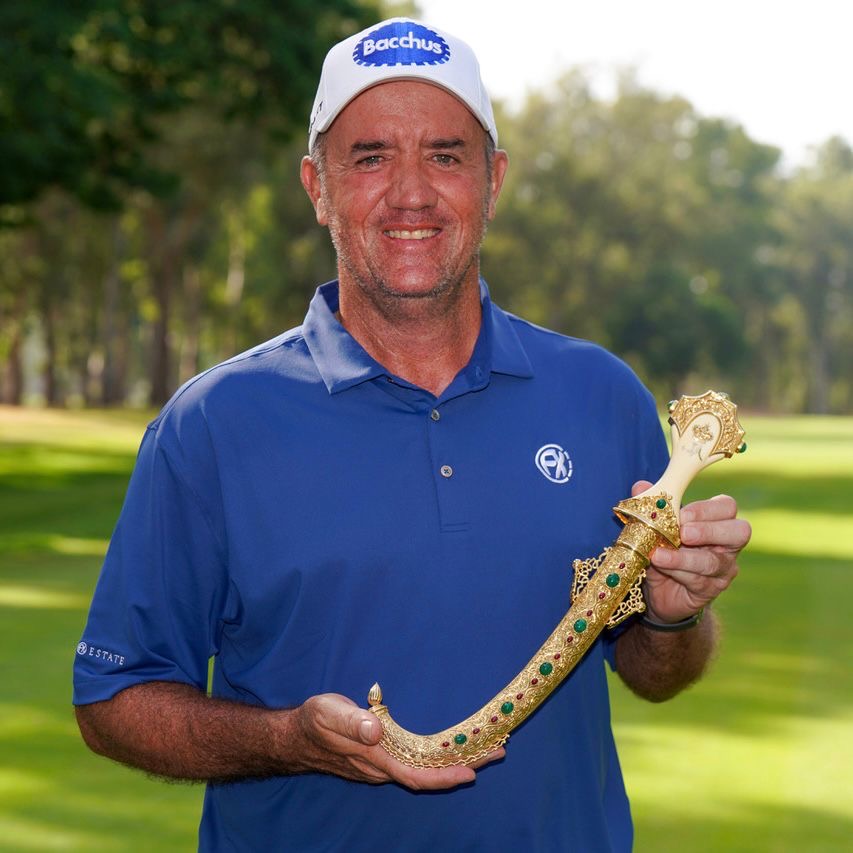
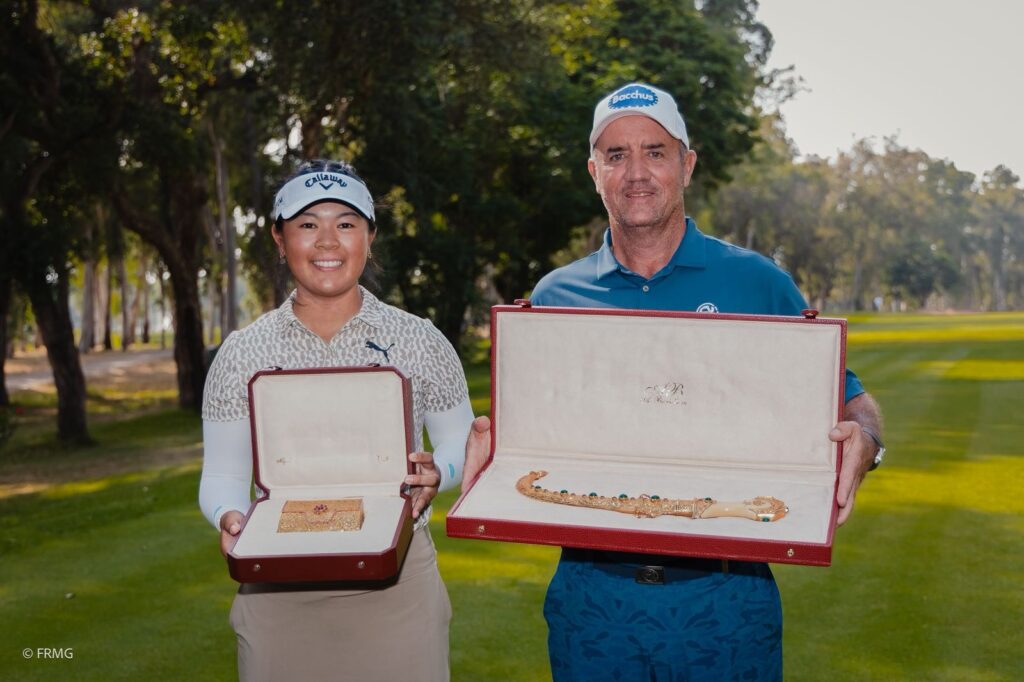
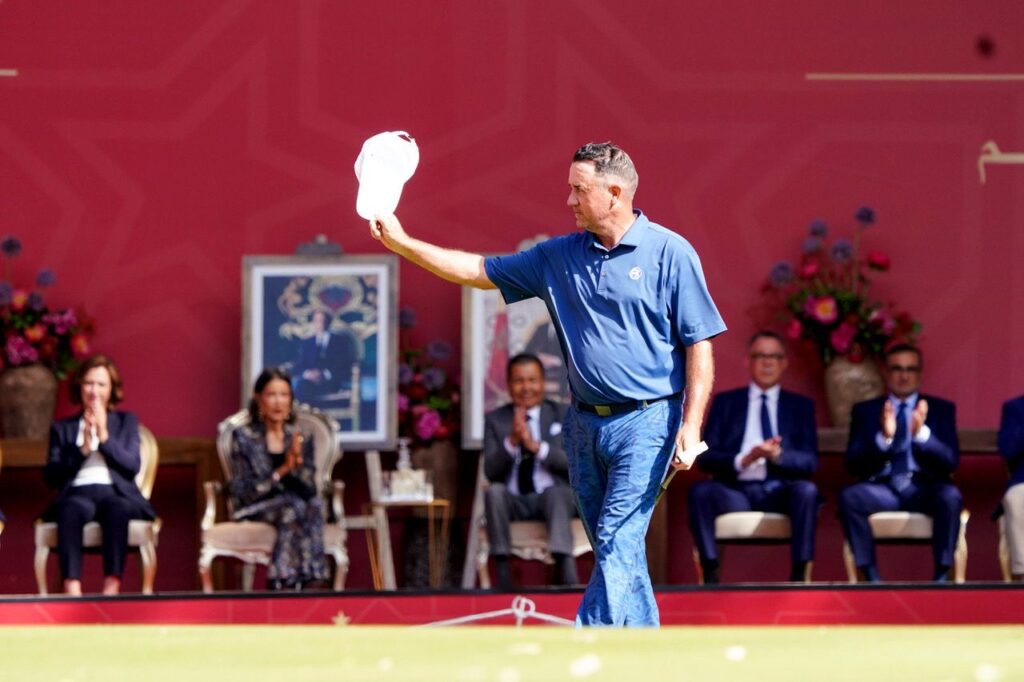
This year was no exception with Australian golfer Scott Hend winning the men’s Hassan II Golf Trophy, and Canadian golfer Anna Huang, age 17, winning the Lalla Meryem Cup. Princess Lalla Meryem presented Huang with the “Minaudiere”, handcrafted in gold and precious stones, the symbol of elegance and victory. Prince Moulay Rachid presented Hend with the coveted “Khandjar”, also handcrafted in gold and precious stones, this traditional Moroccan dagger stands as a symbol of heritage, nobility and authenticity. The dagger is a coveted prize on the professional TOUR circuit, and past winners always mention it as one of their most prized trophy’s.
It represents continuity between generations of Moroccan leadership, from the original vision of Hassan II to the modern international strategy pursued today. It shows how infrastructure, sport, tourism, and national image can reinforce one another over decades.
Many countries and regions host golf events, however very few build institutions that shape perception for half a century. Morocco did exactly that. The world’s golfing legends returned to Rabat for the 50th anniversary, the lasting impression: this is about so much more than a sport.
Culture, Architecture & the Arts
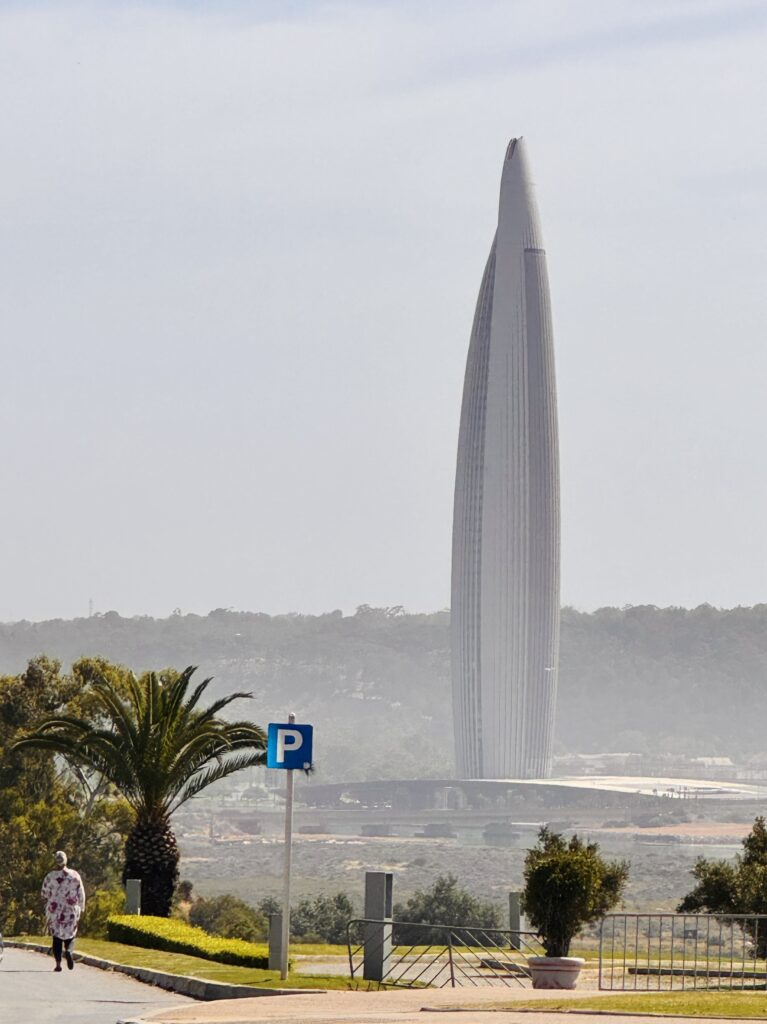
VISIT: The recently opened Mohammed VI Tower is a 55-story, 250-metre skyscraper in the city of Salé, bordering Rabat. It is the tallest building in Morocco and the third tallest in Africa and a mix of residential, commercial, and office spaces with the jewel being The Waldorf Astoria which occupies 18 levels of the building.
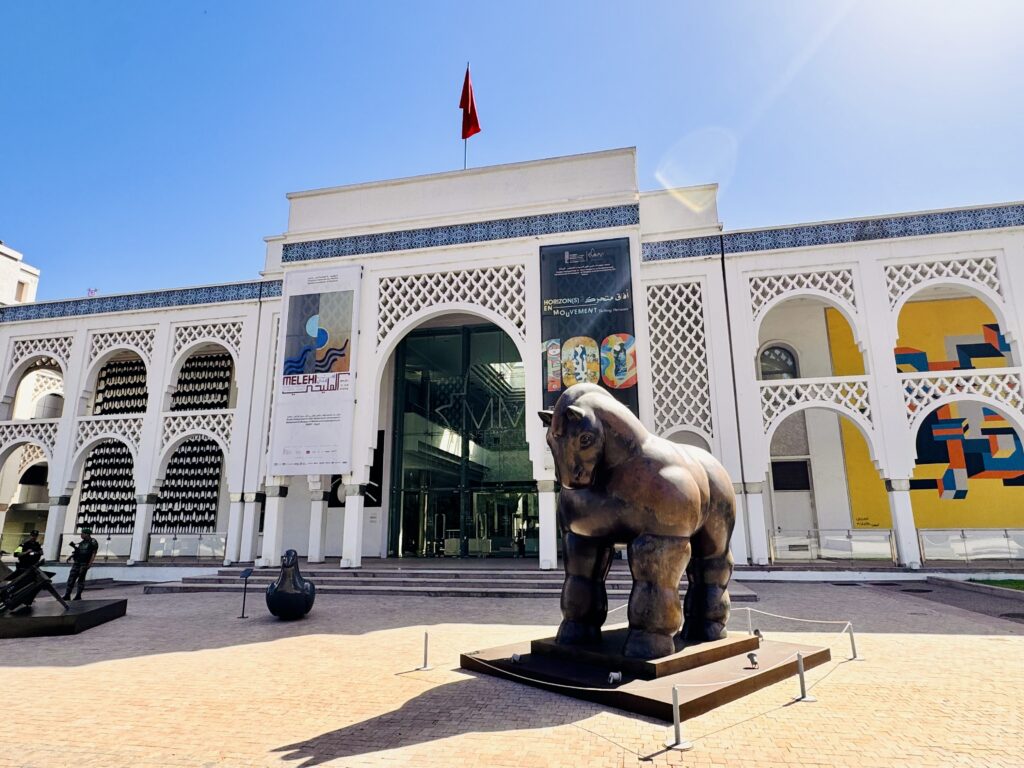
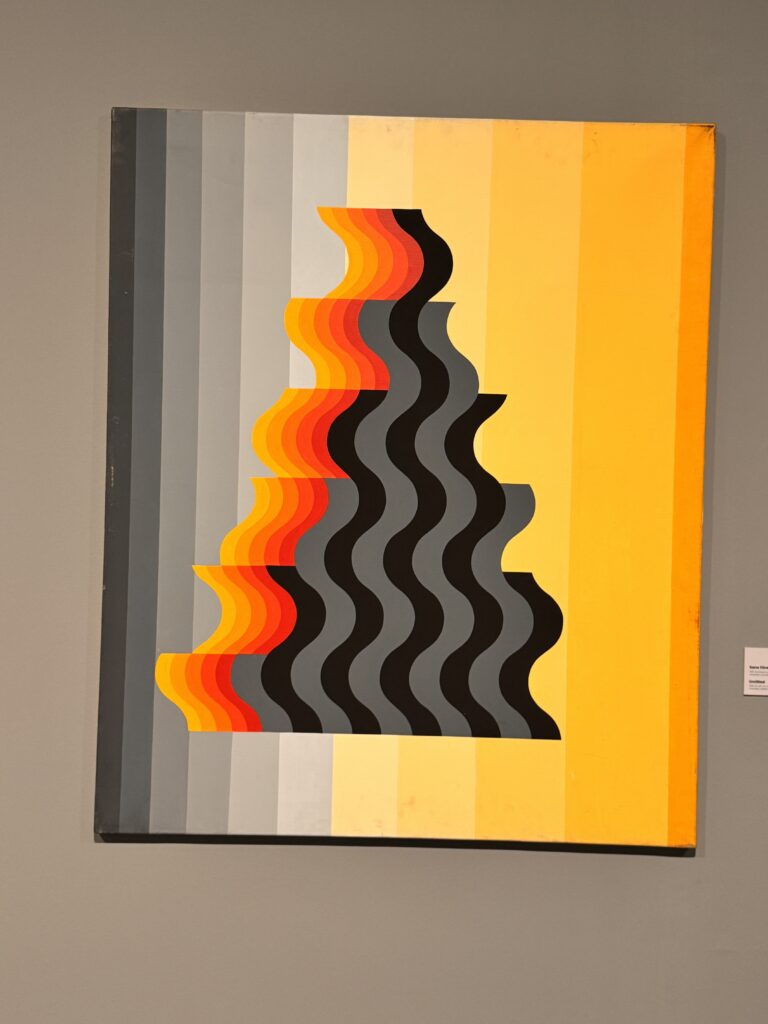
ART: Mohamed VI Museum of Modern and Contemporary Art – Founded by Mohammed VI, the King of Morocco, in 2014, this African Art museum stands as a symbol of the kingdom’s dedication to preserving and promoting Moroccan art. Stunning display of modern art and well worth a visit.
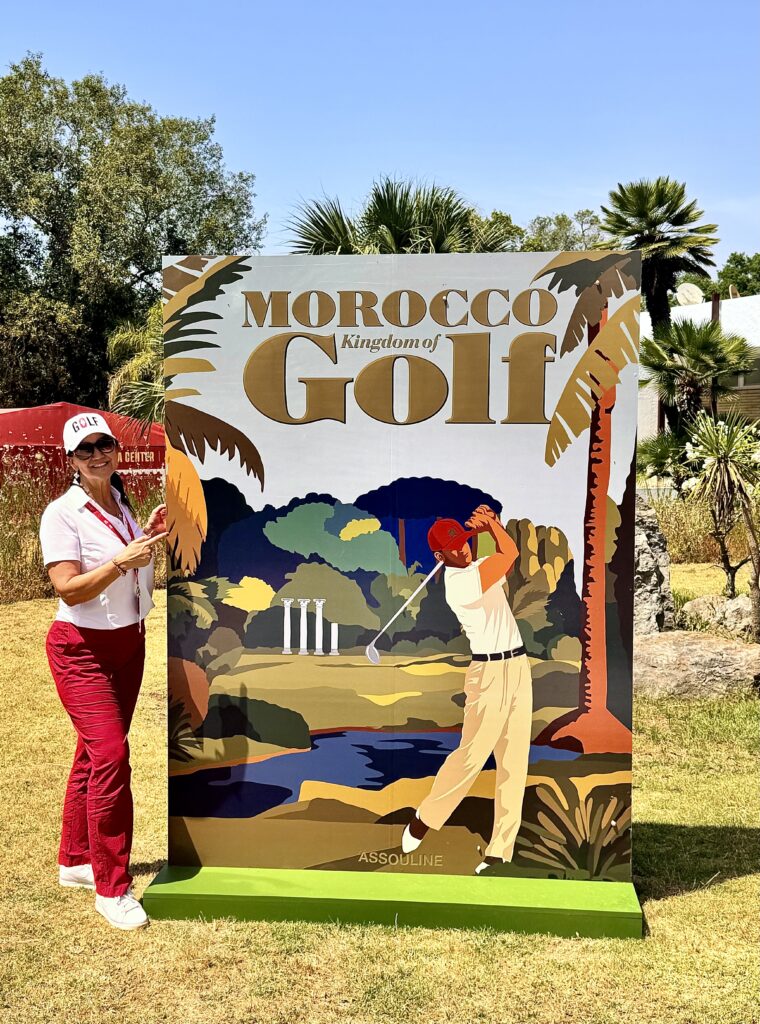
BOOK: Morocco: Kingdom of Golf by John Steinbreder Assouline coffee table book
RESTAURANT: Al Marsa Specializes in fresh seafood and traditional Spanish and Italian dishes. There are two separate areas both on the water with breathtaking views of the Kasbah of the Udayas and the Hassan Tower. Sunset is the best time to catch day and evening views.
SHOP: The Medina – The traditional markets in a maze of winding roads. This vibrant atmosphere filled with local vendors and artisans where you can find traditional Moroccan crafts, including pottery, textiles, spices and leather goods.